
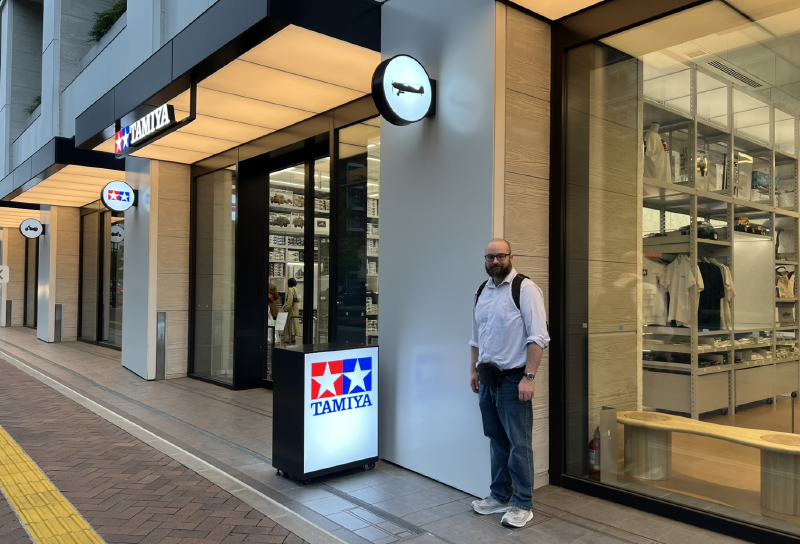
As far back as I can remember, my dad’s hobbies were model trains and model kits. They were just part of who he was - the same way some people have a sport or a band or a corner of the world they’re devoted to, he had those things, and they stayed with him his whole life.
My grandparents lived out of town, so we didn’t visit often, but when we did there was always a stop at the model store - the same one my dad had gone to as a kid, still there in the same small town, which is one of the quiet perks of places that don’t change much. I built my first kit there when I was about seven. An F15 Eagle, I think. I absolutely caked it in glue, operating on the entirely reasonable assumption that more glue meant a better, stronger kit and that the recommended single drop couldn’t possibly be enough. I have no idea what happened to that kit, but I can say with confidence that wherever it is, it probably looks exactly the same as it did forty years ago. The thing was virtually indestructible once the glue dried. Whether that counts as a success is a matter of perspective.
My grandparents still had my dad’s models from when he lived in that house - sitting on TV tray tables in the basement, covered in clear plastic sheets, untouched. To my childhood eyes they were incredible. The detail, the paint, the sheer fact of them. Later in life I came to understand they had their flaws - they were kits from the 1960s, hand painted, built with whatever tools were available at the time - but I also understand now that they were about as good as they could possibly have been given all of that, and that’s not a small thing. I always wondered why they stayed in that basement instead of coming to our house. I never asked. It wasn’t until my grandparents passed away that the kits finally made the trek, and by then the moment to ask had long passed.
What I know is that I was bitten by the bug on those visits. Whatever my dad had, I caught it.
The Kit on the Shelf #
My dad was an aviation buff in the truest sense - properly devoted, the kind of person who talked about his favourite aircraft the way some people talk about music or food or a place that shaped them. His favourite was the F-4 Phantom, and I understood his devotion to it the way you understand someone else’s favourite song. It doesn’t have to be yours to get it. My plane was always the F-14 - blame the swing wings, blame Top Gun - blame the fact that I was eight or nine and somehow got access to it on VHS through the older brother pipeline and something in my brain just locked on and never let go. For the record, I always saw myself more as Goose than Maverick. Iceman was right - Maverick is reckless. Goose’s death didn’t hit me quite as badly as Optimus Prime’s, but it was a close second. My dad took me to see Transformers when I was six, figuring it’d be a natural fit for a kid who was obsessed with the cartoon, and didn’t anticipate the emotional consequences of that decision - which says everything it needs to about what the mid-80s were like for a certain kind of kid.
My brother shared my dad’s devotion to the Phantom, as it turned out. Every year we’d go to the airshow, and one year he got the chance to sit in an F-4 cockpit. I was offered the same experience and passed. The F-4 is a great airplane, it’s just not my airplane. While my brother didn’t stick with the planes and models the way I did, we each inherited a different part of my dad’s hobby life - he went down the model train path, I went down the model kit path. Neither of us picked up stamp collecting (another of my dad’s vices) and I think we both made the right call.
In 2018, my dad passed away unexpectedly - no warning, just a call from my mom that I needed to get to the hospital, and when I got there, he was gone. I didn’t fully understand until much later how much I’d relied on him as a sounding board for the hobby we shared. Years on, I still reach for the phone sometimes. Picked up a new kit, learned a new technique, want to tell someone who would actually care. He’s not there. You’d think I’d have adjusted to that by now.
When it comes to model kits, Tamiya was always the brand - for my dad and for me, that was never up for discussion, and it’s a preference he imparted on me that I’ve never had reason to question. Most of my kits are Tamiya. The quality and attention to detail is superb in a way that becomes obvious the moment you open the box, and if I deviate from them it’s only because I’m chasing something niche that they don’t make - if the Tamiya option exists, I go there first.
I should be accurate about his Tamiya loyalty: he wasn’t exclusively devoted to the brand, a fact that became extremely apparent when I cleaned out his basement afterward. Enough model kits to fully stock a hobby store, brands I’d never heard of, many still in their original packaging. He collected them the way I collect them - always intending to build, always waiting for the right moment, always finding a reason to let it sit a little longer. I inherited this from him too, along with the bug itself, and I’m aware of the irony every time I look at my own shelves.
They say you have to be bad at something before you get good at it. I think my perfectionism may be what’s holding me back. I’m not even bad at building kits - I know I can do it, I’ve done it before, and the results have been good. The perfectionism isn’t protecting me from failure. It’s protecting me from something else entirely, and I haven’t quite figured out what.
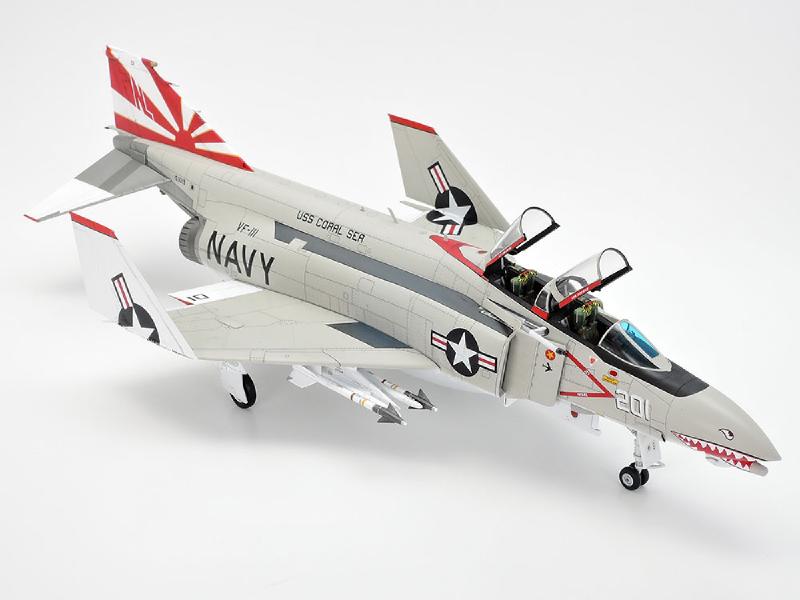
Tamiya makes a 1:48 scale F-4 Phantom with a Sundowners decal set, and even as a non-Phantom person I think it looks absolutely stunning - objectively beautiful, the kind of kit that earns a second look from anyone who cares about this stuff. About two years before we went to Japan, I had it in my hands at a hobby shop in Toronto. I was there with a friend - we were on our way to a Jays game, and if I’m in Toronto I always stop at the well-stocked hobby stores, it’s just what happens. I’d mentioned to him that I was looking for this particular kit, and when he saw me holding it he was like “so are we doing this or what?” And I said no. The timing wasn’t right. It wasn’t a money thing - I bought other kits that day, just not the Sundowners kit. Something about it didn’t feel like the right moment, and I put it back on the shelf and we went to the game.
While I was deliberating, he was doing his own searching. The store has an estate sale section - an area where people can sell the old but still new-in-box collections they find in parents’ basements, exactly the kind of thing that turns up when someone passes and the family doesn’t know what to do with forty years of carefully stored kits. He was looking for a very specific airplane, one his grandfather had actually flown during the war. They didn’t have it that day.
Later, cleaning out my dad’s basement, I found the exact kit he’d been looking for. I didn’t go in looking for it - I didn’t even know what I was looking for - but there it was. I brought it to him without saying much about where it came from, and he figured it out immediately. He tried to refuse it, knowing how much that collection meant to me and what it represented. I told him to take it anyway, because my dad would have been absolutely thrilled about someone wanting to build a kit that meant something to them personally. That was exactly the kind of thing he would have loved. He took it.
A year later, we were planning a trip to Japan, and almost immediately I turned to my wife and said “you know I need to go to Tamiya, right?” There was no debate. No negotiation. She’d seen the basement collection. She’d been there on the evenings when I’d finish a kit and reach for the phone and then remember what had happened. She knew what Tamiya meant to me and where that meaning came from, because she’d been watching it for years. Of everything I pitched for the trip - and I pitched a lot of things - the Tamiya visit required the least discussion by a significant margin. I was going to buy my dad’s favourite airplane in his favourite brand’s flagship store, and it infuriated me - still infuriates me - that I couldn’t call him afterward to tell him about it. But I knew I had to do it anyway. Maybe especially because of that.
So when I mentioned to my friend from the Jays game we were going to Japan and that Tamiya was on the itinerary, he understood immediately what that meant. He didn’t miss a beat. “Oh shit,” he said. “It’s happening, isn’t it.”
He was right.
Tamiya HQ #
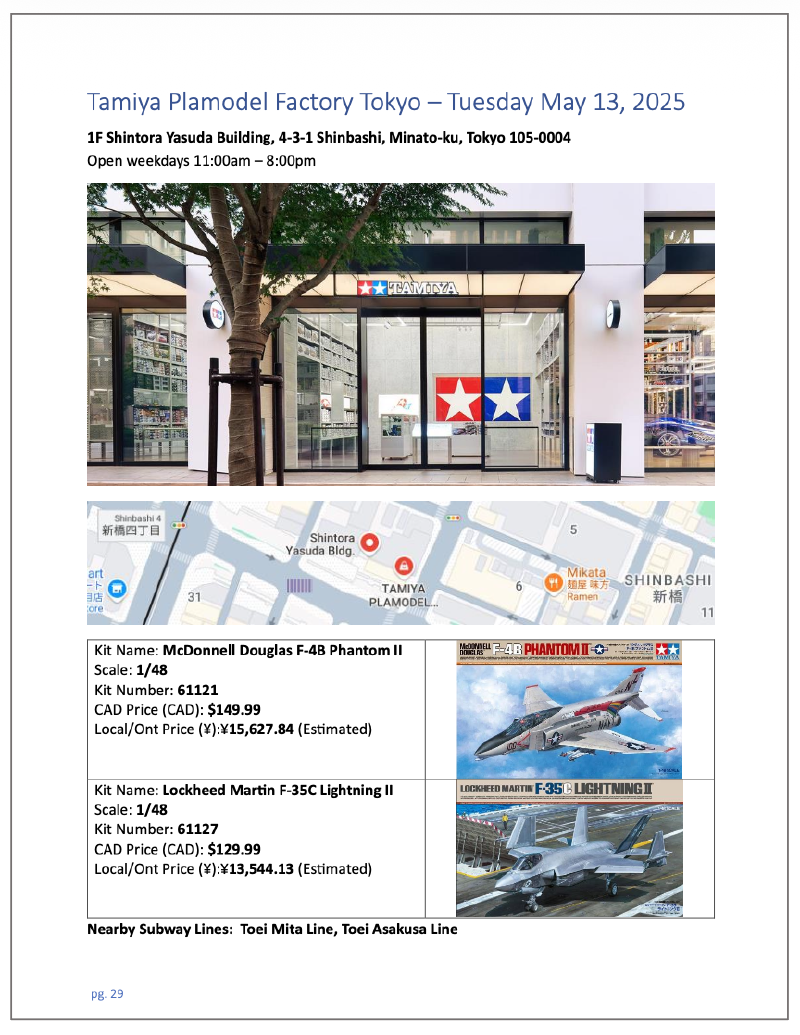
Nothing prepared me for what Tamiya HQ actually is. In North America, a hobby shop is a hobby shop - shelves, fluorescent lighting, a guy behind the counter who may or may not want to talk to you. Tamiya HQ is something else entirely. You could have eaten off every surface. Violin music was playing softly in the background. The staff were wearing white gloves. I walked in and immediately understood that model building in Japan exists on a completely different plane of existence than anything I’d encountered before. They also have professionally built display kits throughout the store - some of the finest model work I’ve ever seen in my life - and I wanted to photograph all of it. I got the impression fairly early that this would not have been welcome, so I just looked. Tried to absorb it. The bar they set in that building is extraordinary.
My wife read the room immediately, gathered the kids, found somewhere to wait, and gave me a look that said take your time. I will be forever grateful for that.
I made my way to the model airplane section, and there it was - the 1:48 F-4 Phantom, Sundowners decal set, the last one in the store, sitting on the shelf like it had been waiting. I don’t entirely know how to describe what happened next. A wave of something - grief, love, the specific weight of missing someone in a moment they would have absolutely loved - just hit me all at once. I was standing in Tamiya HQ in Tokyo, in front of my dad’s favourite kit, and he was gone, and I really, really did not want to cry in front of the white-gloved staff.
So I decided to move quickly. Get the kit, get to the register, get outside, start breathing again. Efficient. Clean. No scenes.
This is where I made my critical error.
The Floor Incident #
The boxes were stacked in a way that required some manoeuvring to get to the one I wanted, and it was becoming a juggling act. Now, one would reasonably assume that a store where the staff wear white gloves and violin music plays softly in the background is exactly the kind of environment where asking for help is not only acceptable but actively encouraged - that the entire atmosphere is designed to communicate “we are here to serve you, please let us.” One would be correct about this. The staff would have been delighted to assist. That was literally their job.
I did not ask for help. These were busy people, professionals, clearly engaged in important work. Surely I could manage this myself without inconveniencing anyone. I’m a capable adult. I’ve moved boxes before.
Operating on pure instinct and a level of self-sufficiency that the situation absolutely did not call for, I did the only logical thing available to me in that moment.
I put some boxes on the floor.
The response was immediate. The reserved, impeccably polite, white-gloved staff moved faster than I have ever seen retail staff move in my life - swept in, collected the boxes, placed them carefully on a nearby table that had apparently been there the whole time specifically for this purpose and which I had completely failed to notice, and said, firmly and in English: “No.”
I had travelled across the planet to honour my dad, and I had just committed what I can only assume is a significant act of disrespect in one of Japan’s most beloved hobby institutions. I found out later that Mr. Tamiya himself - who was still alive at the time - would occasionally visit the sales floor. I am beyond relieved that he didn’t choose that particular moment for an impromptu walk-through.
The Concierge Treatment #
To their enormous credit, the staff were gracious about it. Whether they concluded I was grieving, a clueless foreigner, or simply a disaster - or some combination of all three - they appointed themselves my personal concierge for the remainder of the visit. Gently guiding. Patiently helping. Keeping a watchful eye in case I got any ideas about the floor again.
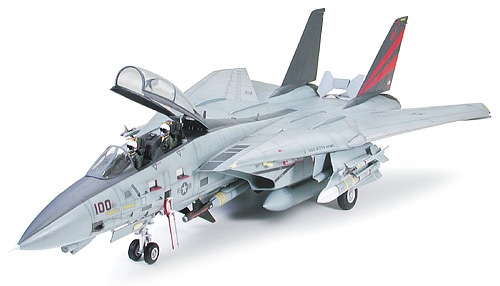
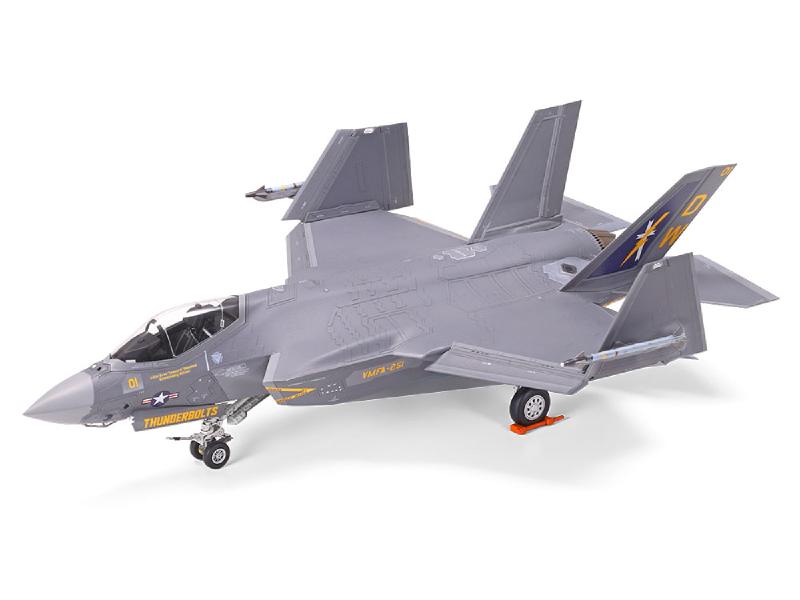
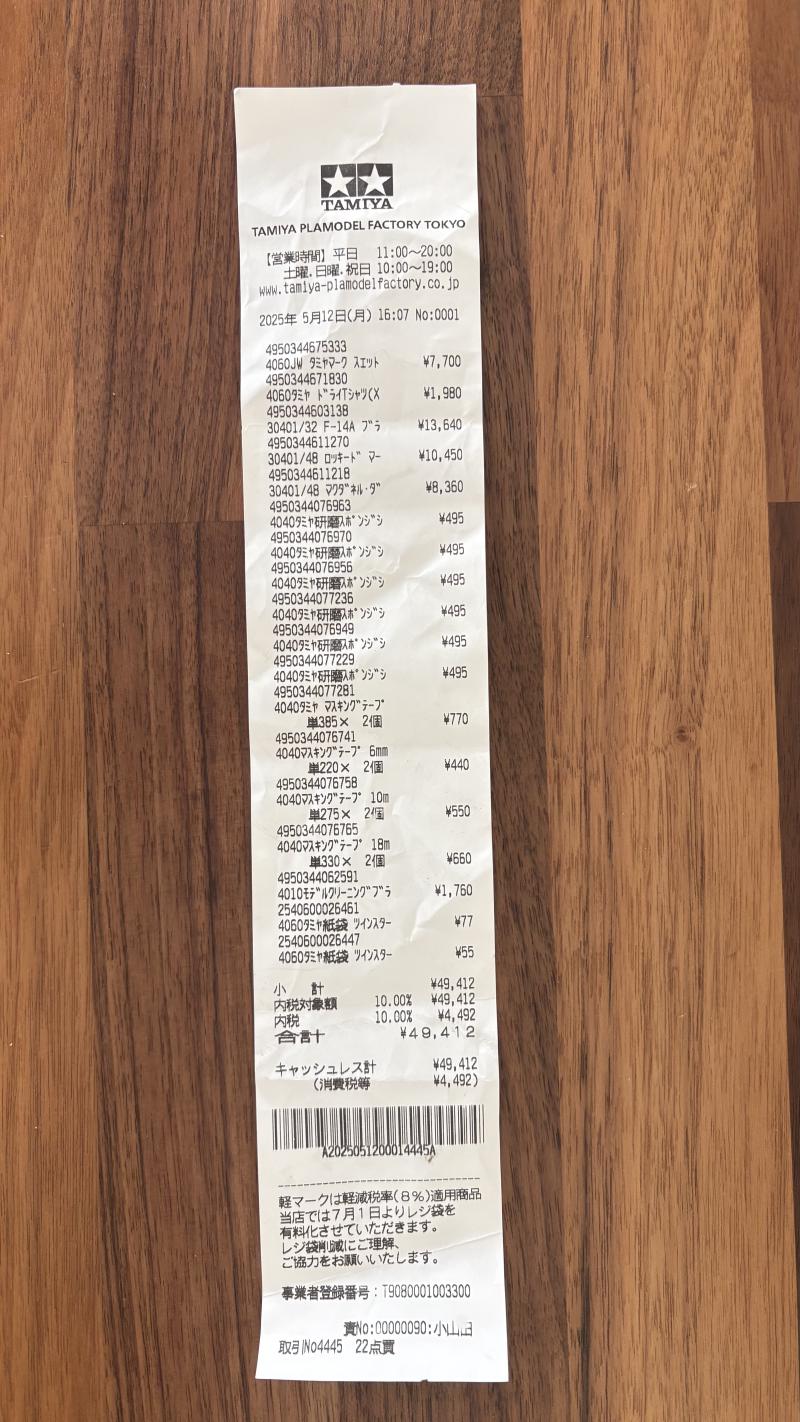
I bought the F-4. Obviously. The F-35 Lightning II was also on the list - both had been the plan going in, my dad’s airplane and one for me, the whole point of the visit accounted for and justified. What I hadn’t planned for was the Tamiya HQ effect, which, it turns out, operates on the same principles as Akihabara - you go in with a budget and a list and the place gets to you anyway. The 1:32 F-14 Tomcat was not on the list. Neither was the sandpaper, the masking tape, the tools, or the considerable quantity of supplies and accessories that somehow also made their way to the counter. In the moment, I decided my existing 1:32 Tamiya F-15 back at home needed a friend. Here was an F-14, decidedly the correct airplane for the job, and the price seemed unnaturally low for what it was. I thanked whatever deity watches over people with international data plans, converted the price to Canadian dollars, and confirmed that even accounting for the extra suitcase I was going to need to buy to get everything home, I was still coming out ahead. It’s technically an older kit, but it’s a Tamiya, which means it’s already better than most things in its category, and the aftermarket parts and decal options are essentially unlimited. There is one small problem - the F-14 Tomcat at 1:32 scale is an enormous airplane, and I have absolutely no idea where I’m going to put it when it’s finished. Maybe on a TV tray. Covered in some clear plastic.
At some point, an older Japanese gentleman who was also browsing turned to look at my growing pile, gave me a deliberate thumbs up, and said “niiiiice” in English. Unprompted. With real conviction. Model building in Japan is taken seriously in a way that’s hard to fully convey - this wasn’t a friendly stranger being polite. This was a peer, someone who understood exactly what was in that pile and what it represented, offering a genuine assessment. I had apparently made good choices.
I have never felt more seen in my life.
When I brought everything to the counter, my wife appeared from wherever she’d been waiting with the kids and placed two more items down - a Tamiya hoodie and t-shirt, both in my size, which in Japan is not a given and apparently required some searching. She just said “and these” and that was it. She’d found them while I was doing my thing, knew I’d want them, and didn’t make a production of it. I’ve had that feeling a lot with her over the years - the feeling of being genuinely known by someone - and this was one of those moments.
Between Tamiya and my daughter’s Akihabara haul, we did end up buying a new suitcase on the way home to fit everything. I still have the receipt - printed on paper that is noticeably nicer than it has any right to be, presented on a small tray, handed over with two hands. I intend to scan it for this post. It’s ridiculous. I still wonder what the airport security staff made of the X-ray.
The Kit That Sits There #
The F-4 Phantom is not built.
It’s sitting where I can see it, has been for over a year, and I keep looking at it and finding reasons to wait - the right paint, the right workspace, the right moment. If I’m being honest with myself, I’m terrified of it. If I build it and it isn’t perfect, what was the point of any of it?
The frustrating part is that this perfectionism isn’t something I learned from my dad. He just built them - sat down, followed the instructions, enjoyed the process. While he loved detailing his kits to make them authentic, he didn’t obsess about them. I think about those kits in my grandparents’ basement, hand painted in the 1960s, not without their flaws, and completely worthy of the plastic sheets that kept them safe for decades. He built them because he loved building them.
He would think I was being ridiculous, and he’d be right. I’ve put a lot of self-created pressure on both myself and the kit, and neither of us really deserves it. I don’t need it to be perfect. It’s never going to look like something from the display cases at Tamiya HQ, and that was never the point. I just want to do it justice - build it well, give it the attention it deserves, and enjoy the process the way my dad would have. That’s all. Somewhere between Tokyo and now I managed to turn that into something much more complicated than it needs to be.
The kit sits there. One day I’ll just start it.