
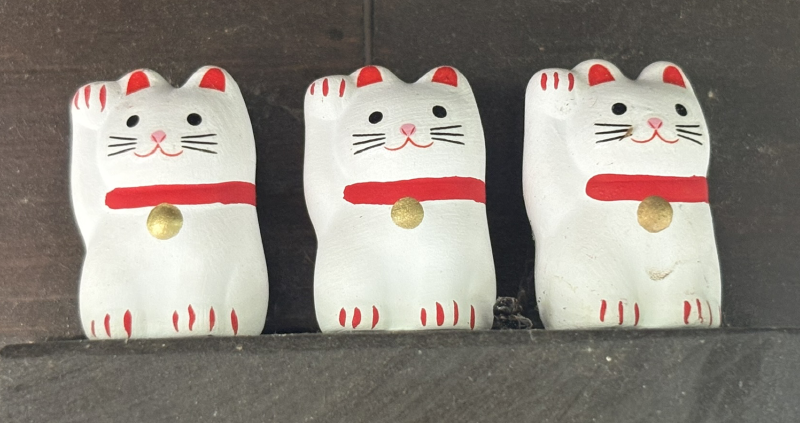
My wife and kids love cats, which is relevant context for why, when I discovered there was a temple in Tokyo dedicated entirely to them, the question of whether we would go was never really a question at all. It wasn’t near anything else on the itinerary, but that didn’t matter - the cat temple was the starting destination, locked in from the moment I found it. We’d figure out the rest of the day around it.
Gotokuji is in Setagaya, a residential ward in southwest Tokyo, and the subway doesn’t drop you at the door - which turned out to be one of those accidental gifts that Japan keeps handing you when you’re not paying attention. The walk from the station took us through quiet neighbourhood streets, the kind that don’t make the travel blogs because nothing is happening there except people living their lives. No vendors, no tourist signage, nothing designed to catch your eye. Just residential Tokyo, going about its morning, with us walking through it. On the way, we walked past a small curry shop - clearly not meant for tourists, nothing about it was trying to get our attention. I made a mental note, the kind you make when something looks promising but you’re not ready to commit yet. If nothing better presented itself on the way back, we’d give it a try.
I Was Completely Wrong About the Cat Temple #
I had looked up Gotokuji before we went, the way I look up everything before we go anywhere, and from the pictures I’d formed a mental image of a small roadside shrine - a few cat figures, maybe four or five feet across, charming and compact. Something we could see in twenty minutes and then find coffee nearby. I’d also read that you could buy ceramic cats at the temple, which in retrospect should have been my first clue that the place was bigger than I’d pictured - a shrine the size I had in mind doesn’t typically need its own retail operation.
In reality, the internet had undersold it entirely, which almost never happens.
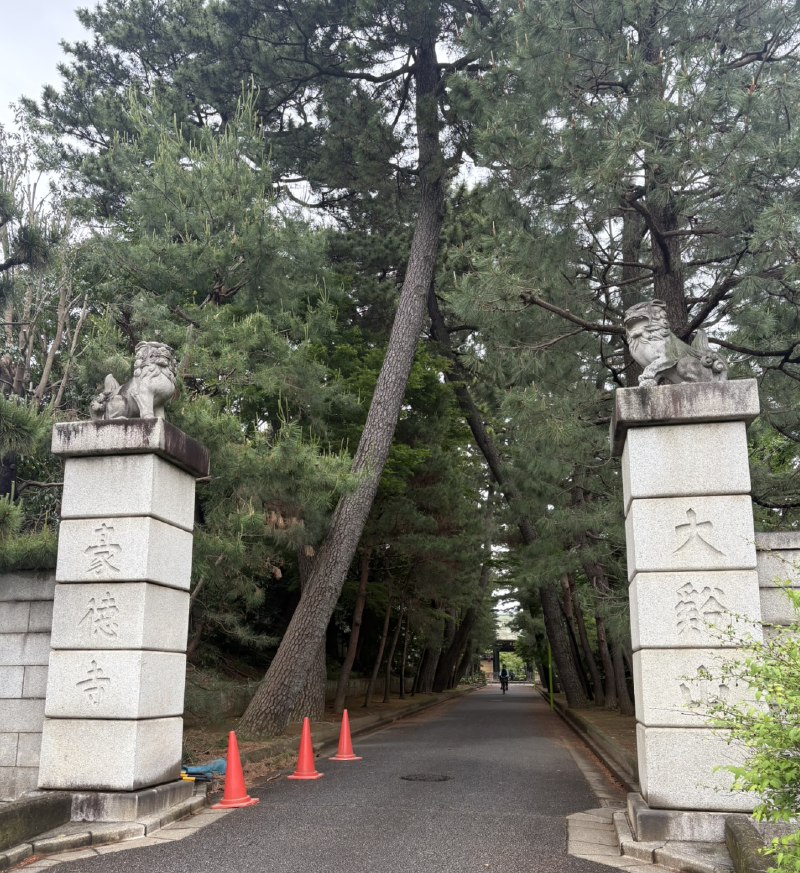
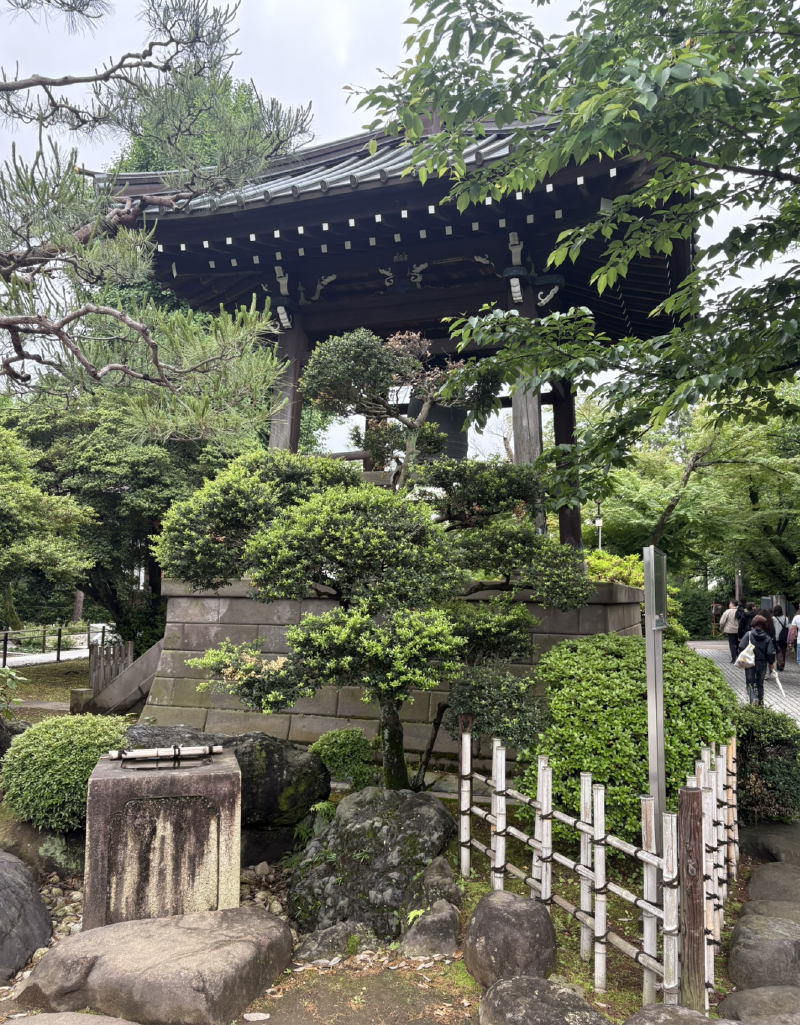
The entrance to Gotokuji is a long laneway framed by large trees, the kind that make the light go soft and dappled even on a bright day, and past the gate the grounds open up into something much larger than I’d been expecting - multiple buildings, multiple shrines, stone paths, gardens, laneways winding through all of it. Gotokuji is not the size of a hot dog cart. It is a massive, sprawling temple complex, and I say that as someone who showed up expecting something closer to the former.
When a TBS news crew asked me a few days later what I thought of the cat temple, I told them it was bigger than I thought. At the time I assumed I’d regret saying something so underwhelming on camera. In retrospect, it was the most accurate thing I could have said.
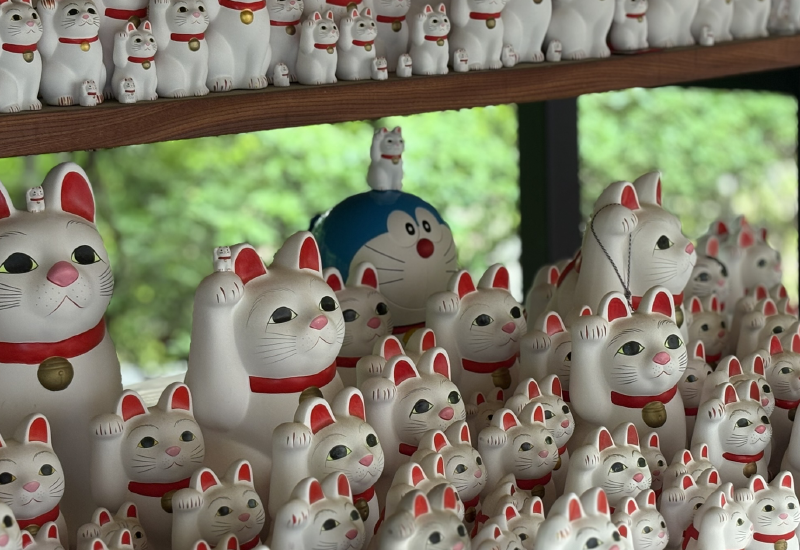
And cats. Thousands of them. Not real cats - ceramic maneki-neko figures, the beckoning cat you’ve seen everywhere, the one with the raised paw. Thousands of them clustered on shelves and stands and every available surface, all sizes, all slightly different, each one left by a visitor at some point. The internet had shown me some of this and I’d still managed to underestimate it completely. It’s the kind of thing that should feel overwhelming and instead feels strangely extraordinary. You stand in front of them and you just look.
Nestled amongst the thousands of cat figures was a large Doraemon - the beloved robot cat from the future, sitting there amongst the traditional figures as if he’d always been there and nobody had ever questioned it. He belonged. It said something about the spirit of the place that I really appreciated: this is sacred, we take it seriously, and there is absolutely room for a cartoon cat from the 22nd century. I loved that.
The Cat Who Was Absolutely At Work #
My wife and kids had been hoping, on some level, for actual cats wandering freely through the grounds - which, when you think about it, is a completely reasonable assumption. It’s a cat temple. Where else would you find cats if not here? There was one - a large black and white cat who had made it very clear from the moment we arrived that he was tolerating visitors rather than welcoming them, and that physical contact was not on the table. We respected this. As a two-cat household I understood completely - my cats hate being picked up and they’re in their own home. This cat was essentially at work. Someone nearby didn’t read the room and tried to pick him up anyway, and he was gone in an instant. I felt a certain solidarity with him. He was just chilling, doing his thing, and the tourists descended. We were tourists too, technically, but I’d like to think we were the right kind.
The cat quota, it should be noted, was eventually satisfied in spectacular fashion. That’s a story for another day.
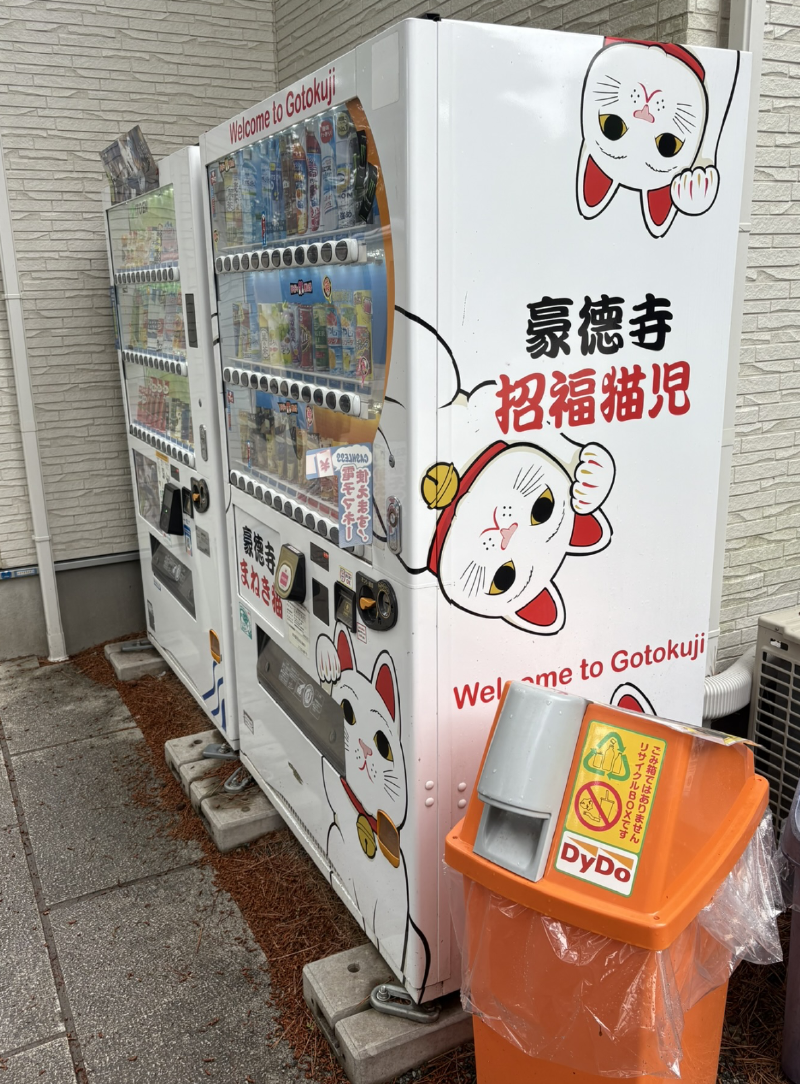
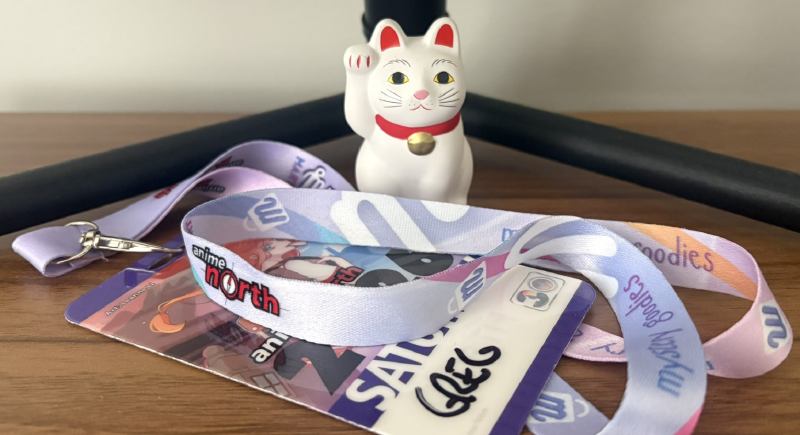
We did each pick up a ceramic maneki-neko on the way out. The limit was two per family, so I bought two and my wife bought two in a separate transaction. We paid for all of them. I’m calling it a victimless crime. Mine sits on my desk and serves as my rubber duck for debugging - I explain my code to it when I’m trying to work through a problem, which is a real software development technique and not something I made up. It is an excellent listener and has never once judged my variable naming conventions.
The Graveyard #
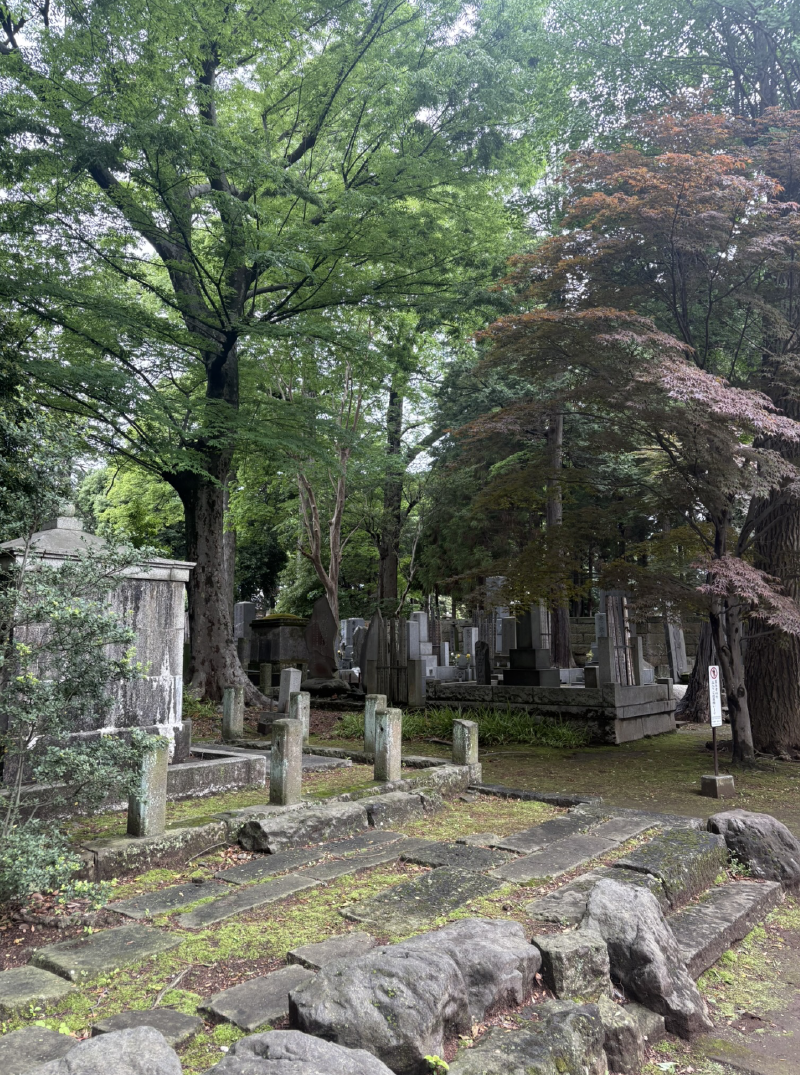
At some point we followed a path that led us, gently and without any particular warning, into a graveyard. The entrance wasn’t blocked and there was probably signage in Japanese that we couldn’t read, so we just followed where the path went and gradually realized we were walking amongst grave markers - quiet, unhurried, nobody else around. The grounds were beautiful in the way that well-tended old places are beautiful: moss on stone, trees overhead, complete stillness. We didn’t rush out. It felt like we were supposed to be there, which I realize sounds strange, but it didn’t feel like trespassing. It felt like the temple had simply included us in something it was already doing.
I had coached the kids before we went in - don’t touch anything, be respectful, this is a sacred place, act accordingly. They listened. I was proud of them. We’d arrived early enough that the grounds were peaceful and unhurried, a handful of visitors, plenty of space to move at our own pace. By the time we were ready to leave, the crowds had started arriving - loud, grabby, the kind of energy that a place like Gotokuji is not built for. I understand it. We were technically part of the same phenomenon, foreign visitors who’d read about this place and made the trip. But there’s a difference between showing up somewhere with reverence and showing up somewhere like you own it, and the timing of our exit felt right.
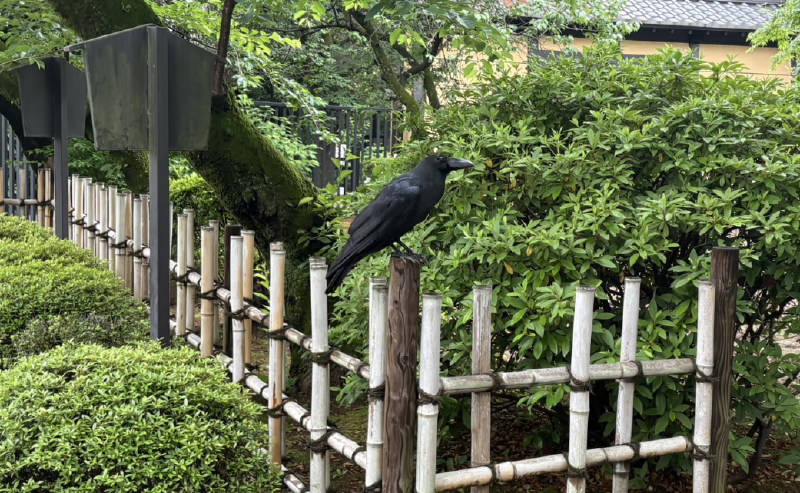
On the way out, a crow watched us leave from atop a post near the gate. I say crow - it was the size of something that should be handing out quests in a video game. Japanese large-billed crows are a different species entirely from what we have in Canada, and the size difference is immediately apparent. This one gave us a thorough look-over and then returned to whatever it had been thinking about before we showed up. No fear response, no skittishness, just the unbothered confidence of a bird that has correctly assessed the situation and determined it could take all of us in a fight if it came to that. We chose not to find out.
The Best Curry I’ve Ever Had #
On the way back, there was a brief moment of competition for the curry shop. A nearby establishment had a sign featuring an anime character my daughter recognized, which briefly raised hopes that it might be a restaurant. It was a massage parlour. We couldn’t figure out the connection between the character and the business, and my daughter knows all the lore, so if she couldn’t draw the line it probably doesn’t exist. We moved on.
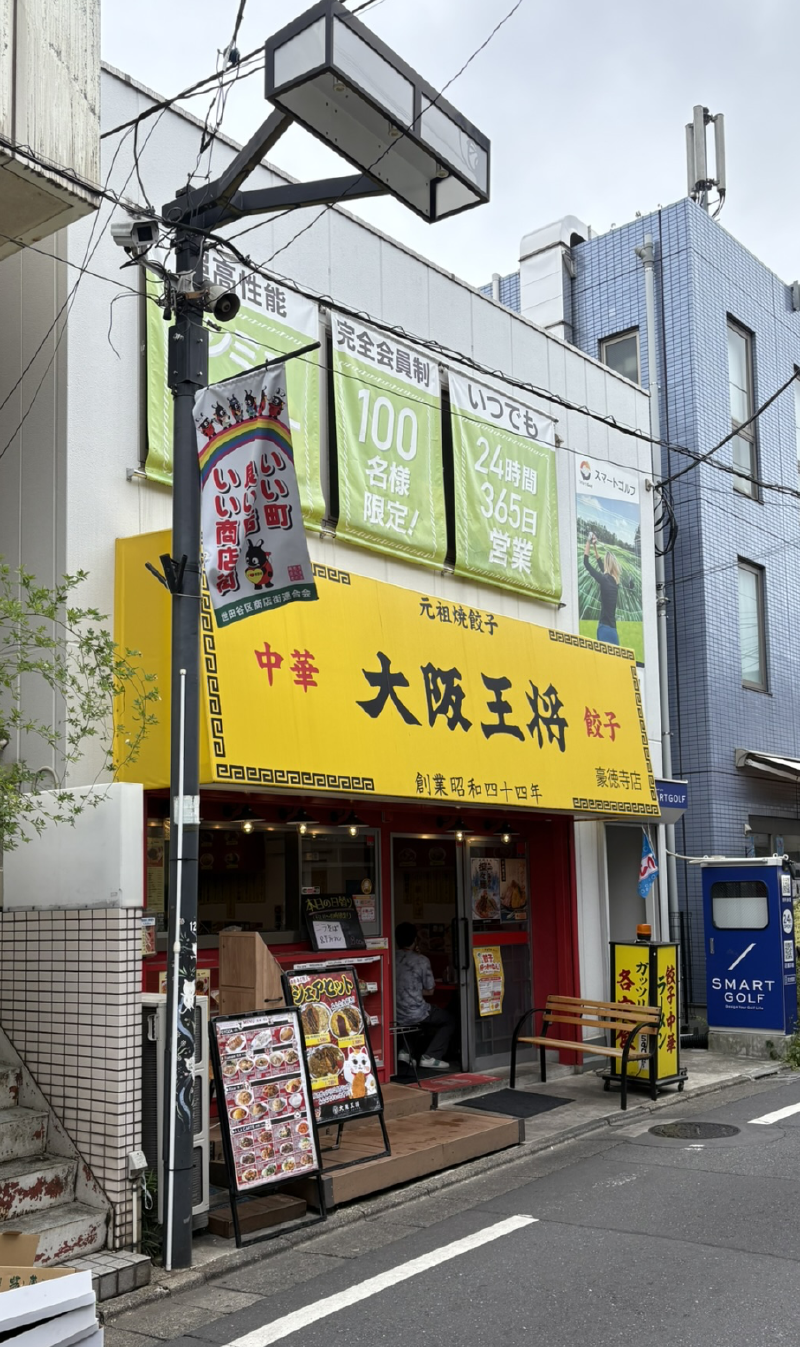
Nothing else presented itself, so we took a chance on the curry shop we’d spotted on the way in. It wasn’t with the cluster of restaurants near the temple - it was tucked away on its own, and we were the only foreigners in there, which felt like a good sign. Back home, when I go to a restaurant known for foreign cuisine and find it full of people from that region, I take it as a quality endorsement - they know what the real thing is supposed to taste like, and they chose this place. The same logic applied here. I couldn’t read the signage, so I had no idea what we were actually walking into, but a room full of locals who clearly knew something we didn’t was endorsement enough. It turned out to be Osaka Ohsho - a Japanese Chinese restaurant chain with a legendary reputation for gyoza, which I only discovered much later when I looked up a photo of the storefront. At the time it was just a place that looked promising and didn’t turn us away.
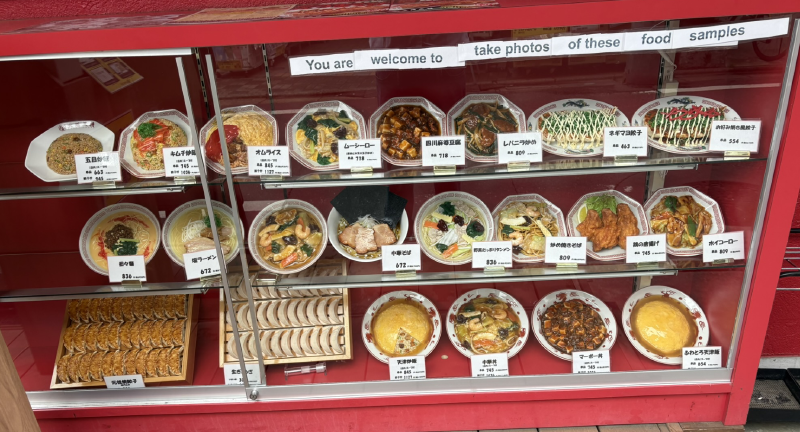
I got my first Asahi Super Dry of the trip, which cost what I can only describe as an embarrassingly reasonable amount of money. My wife got something alcoholic - I honestly cannot remember what, I was still processing the bill. Four meals, two drinks, less than forty Canadian dollars. For context, that’s roughly what a single entree costs at a mid-range restaurant back home. Japanese curry, cold Asahi, a room full of locals, a chain institution I didn’t know I was in - it was one of those meals that recalibrates your expectations for everything that comes after it.
Sometimes, The Japlan Was Wrong #
From Gotokuji we made our way to Harajuku. The Japlan had noted that Takeshita Street was supposedly the main event there, but that online reports suggested it was overcrowded and not necessarily worth the effort. Armed with this information, I didn’t make finding it a priority. The online reports were wrong. My wife saw it anyway and said nothing. These things happen.
We emerged from the station, wandered in what felt like a reasonable direction, and ended up at Cosme and Uniqlo. I concluded that for a neighbourhood famous for its fashion scene, Harajuku was perhaps a bit overhyped. Maybe the influencers were full of crap. It happens.
It was not overhyped. Takeshita Street - the wild, maximalist, completely unhinged street fashion scene with the insane colours and patterns - was apparently about two blocks away the entire time. My wife had actually seen it while we were there, registered it, and assumed I didn’t want to go since I hadn’t mentioned it. I absolutely wanted to go. That’s the entire reason we’d come to Harajuku.
We had a brief but illuminating conversation about this after we landed safely back in Canada.
I have not told the kids what we missed. Especially since I then redirected us to a model kit store on the way home. I am afraid for my life.
Rain Man, But For Cosmetics #
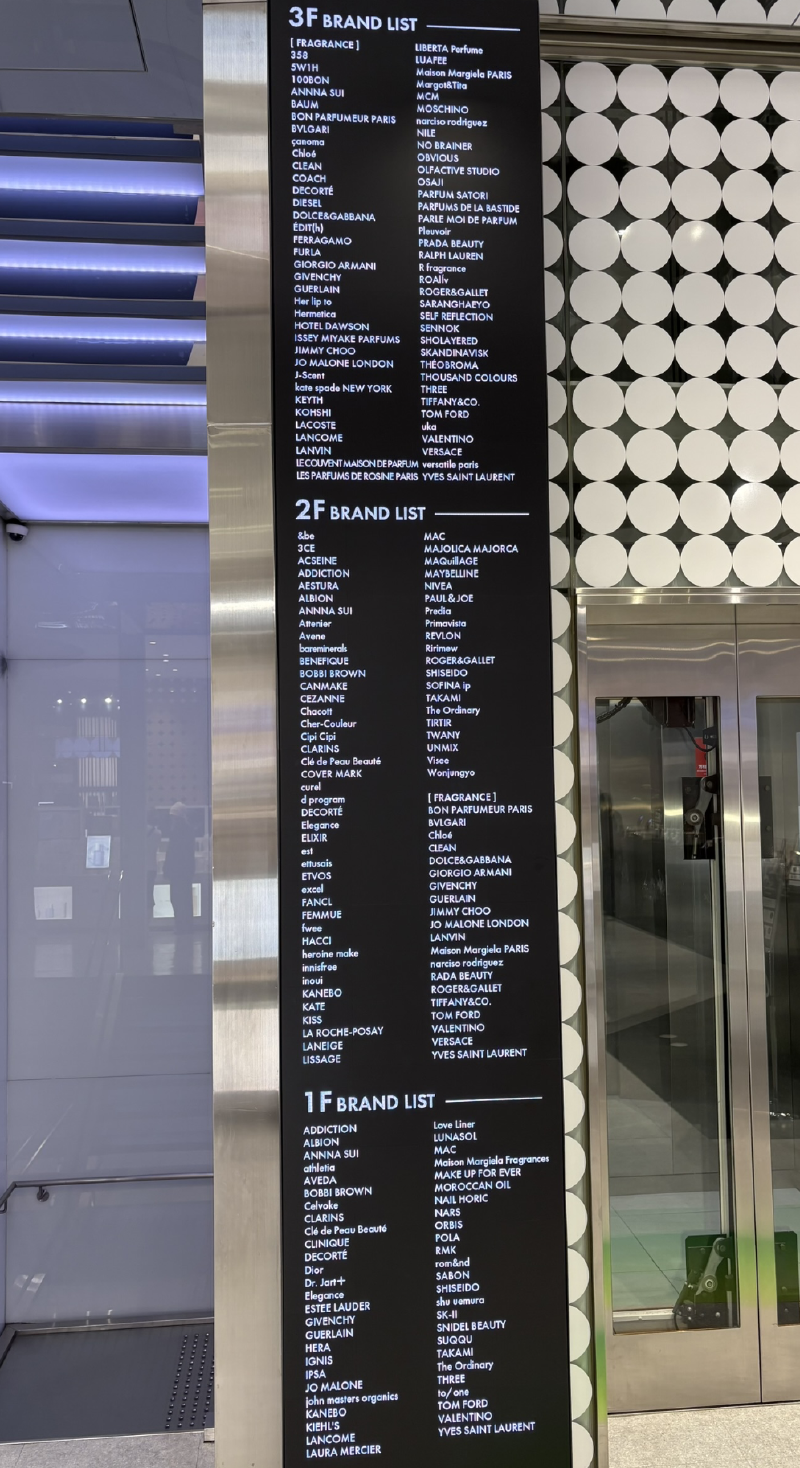
Cosme was first - a multi-floor cosmetics store carrying what appeared to be every skincare and beauty brand that has ever existed, arranged across three floors of immaculately organized displays. My youngest daughter had specifically wanted to come here, having done her research in advance and identified it as the place most likely to carry what she was looking for. She moved through those floors with a focused intensity that the staff clearly hadn’t anticipated. They made a few attempts to help and then backed off, because there was nothing they could have told her that she didn’t already know. She wasn’t browsing - she was executing. She knew every brand, every product line, and crucially, she knew exactly what was available in Canada and what wasn’t. Anything she could get at home she walked past without a second glance. She was only interested in the regional products - things that were completely ordinary in Japan and completely unavailable where we lived. It was the most strategically efficient shopping I’ve ever witnessed, and I say that as someone who spent months researching airport gate probabilities.
What I found out that day is that she is Rain Man, but for cosmetics - and I mean that as the highest possible compliment. I followed her around the store because there was nothing else to do - this was her show entirely, and I had no knowledge that would have been useful to her even if she’d wanted it. My contribution was carrying the products and bags while she worked her way through the floors. I was just a dad in a Japanese cosmetics store, doing his best to keep up and stay out of the way.
The staff were also visibly surprised to see someone her age in the store - either because Japan doesn’t have the same “Sephora kids” phenomenon we do in North America, or because it was a weekday afternoon and the unspoken question of why she wasn’t in school was hanging in the air. Either way, they left her to it, which was the correct call.
She spent approximately three hundred Canadian dollars, which had been budgeted for and planned in advance. What had not been fully communicated was the tax-free process - spend over a certain threshold in one transaction, show your passport, they record the details, and then everything gets sealed in a tamper-proof bag with signage making absolutely clear that opening it before you leave Japan will result in consequences that nobody wants. We took this seriously. She carried those sealed bags for the rest of the trip, unable to touch any of it, which is its own particular kind of torture when you’ve just spent three hundred dollars on things you’ve been wanting for months.
The people at the airport, when we went to declare everything, looked at us voluntarily presenting our receipts and passports and waved us through without inspection. Apparently self-reporting tourists are considered sufficiently legitimate. The dramatic buildup was for nothing. It was both a relief and slightly anticlimactic.
The Future of Checkout #
From Cosme we went to Uniqlo, which was on my wife’s list for reasons that made complete sense in theory. The plan: bring virtually no clothes to Japan, buy a full wardrobe at Uniqlo on the cheap, leave with a new Japanese-inspired aesthetic. Uniqlo prices are remarkably affordable at the best of times, and as a foreigner you get the tax-free benefit on top of that - essentially thrift store pricing for well-made clothes. The perfect crime, in theory.
It ran into one significant obstacle, which is that Japanese clothing sizing aligns itself with the average Japanese person rather than the average Canadian middle-aged mom. Every skirt she tried on looked great on the mannequin and considerably less great when she actually put it on - her assessment, not mine, I thought everything looked fine and said so repeatedly to no effect. She bought one skirt. A single skirt, from a wardrobe that was supposed to fill a suitcase.
I found a shirt that fit me, which was notable enough to mention. It had The Great Wave on it and it worked because it was actually a design from a Boston brand being sold in Japan, meaning the sizing accommodated a broader range of builds than the standard Japanese cut. It barely fits and I am extremely careful when I wash it.
The kids bought somewhere between six and fourteen shirts each - I paid for them, clothing having been designated as not a souvenir and therefore not counting against their budget, a piece of creative accounting I allowed in the moment and have since reflected on. I am fairly confident those shirts have not been worn. I should go check on that.
What Uniqlo did deliver, completely unexpectedly, was the most remarkable checkout experience I’ve ever encountered. You place your entire basket into a well in the counter. The system reads everything in the basket simultaneously and tallies the order without you removing a single item. The whole thing happens in seconds. I stood there thinking about the 1987 air conditioner sitting in my hotel room and trying to reconcile how those two things exist in the same country at the same time. Japan, that’s how.
One More Stop #
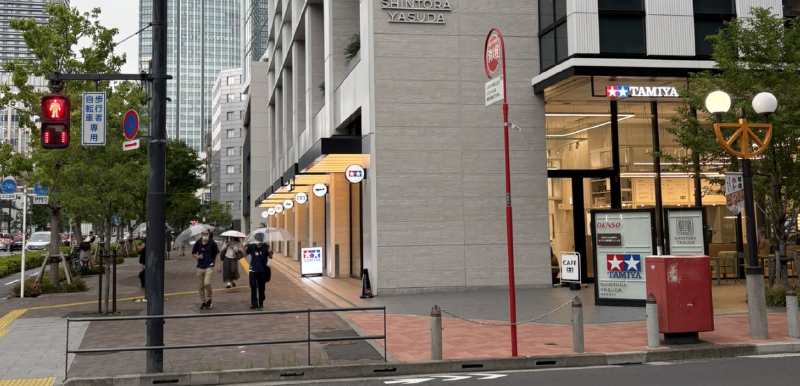
By the time we’d finished at Cosme and Uniqlo it was around 5pm, and the day had been long. The crowds in Harajuku had been relentless and we hadn’t found the street we’d come for. The Japlan for the day had been ambitious - the Hachiko memorial statue, Tower Records, possibly the Ghibli Clock, Ikebukuro as a backup if we got bored. We made it to Gotokuji, Cosme, and Uniqlo. The famously loyal dog will have to wait for next time.
Looking at the subway map on the way out, I noticed that Tamiya HQ was essentially on the way back to the hotel - not a detour so much as a slight extension of an already long journey home. I mentioned it to the family. The kids, having thoroughly exhausted their spending money and most of their energy, didn’t have strong objections. There was some grumbling between the subway station and Tamiya - it’s not right next door, and a light rain had started - but the walk was actually quite nice, grumbling aside.
If they’d said no, we’d have just gone another day. They didn’t say no.
That visit gets its own post.