
Before we left for Japan, I did what any responsible parent does when taking their kids to Akihabara - I went down an internet rabbit hole reading warnings about maid cafes, hentai shops, and the general moral peril awaiting any family foolish enough to wander into Tokyo’s electronics and anime district. I read all of it. I took notes. I prepared myself for the worst.
None of it happened.
We visited Akihabara four times across our week in Tokyo, and not once did we stumble into anything inappropriate, alarming, or beyond what my kids could handle. I’m sure that content exists somewhere in the district - I’m not naive - but the reality of being there with a family bore no resemblance to what the internet had worked itself up about. I want to say that clearly, because I’ve seen enough pearl-clutching in travel forums to know someone planning a similar trip might be reading this hoping for an honest account.
Akihabara is fine. Take your kids. Pay attention, use your judgment, and you’ll be absolutely fine.
The only actually unexpected adult content we encountered on the entire trip was a small bookstore in Kyoto, operated by a rather nice grandmotherly individual, which had manga on one wall and fully uncensored material on the other. That’s a story for another post.
Sunday Was a Zoo - Just Not the Zoo We Expected #
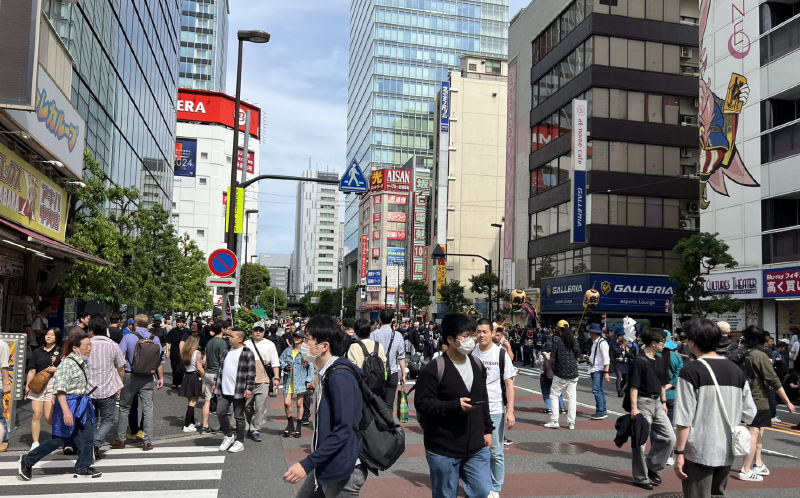
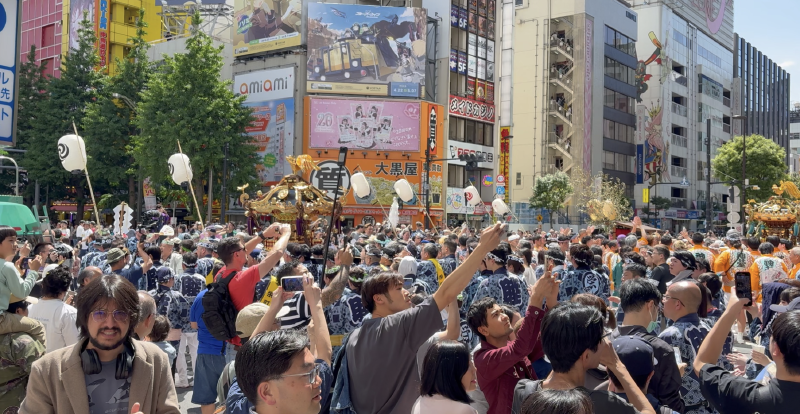
Our first proper visit was Day Two - a Sunday, which meant Chuo Dori, the main street, would be closed to vehicle traffic from 1pm to 6pm and turned over to pedestrians. Based on everything I’d seen online, I was expecting a sea of cosplayers taking over the streets, an explosion of anime culture spilling out of every doorway, the full spectacle. What I had not accounted for - and the Japlan, for all its 69 pages, did not flag this - was that we had arrived during the Kanda Matsuri. One of the three greatest festivals in all of Japan. A ceremony held every two years. The Mikoshi Miyairi, the ceremonial return procession, was passing directly through Akihabara while we were there, which goes some way toward explaining both the volume of people and the notable absence of cosplayers. They were probably smart to sit this one out. You don’t really want to be competing with a centuries-old festival procession for attention, and I say that as someone who only found out what he was looking at after the fact.
We were right in the middle of it, which I have photos to prove, and it was extraordinary - just not the extraordinary thing I’d been expecting.
As a footnote to all of this: about a week later in Osaka, we accidentally walked into the middle of a cosplay contest with over a thousand participants. Japan has a way of giving you what you were looking for, just not where or when you thought you’d find it.
Tall, Narrow, and Absolutely Full of Things #
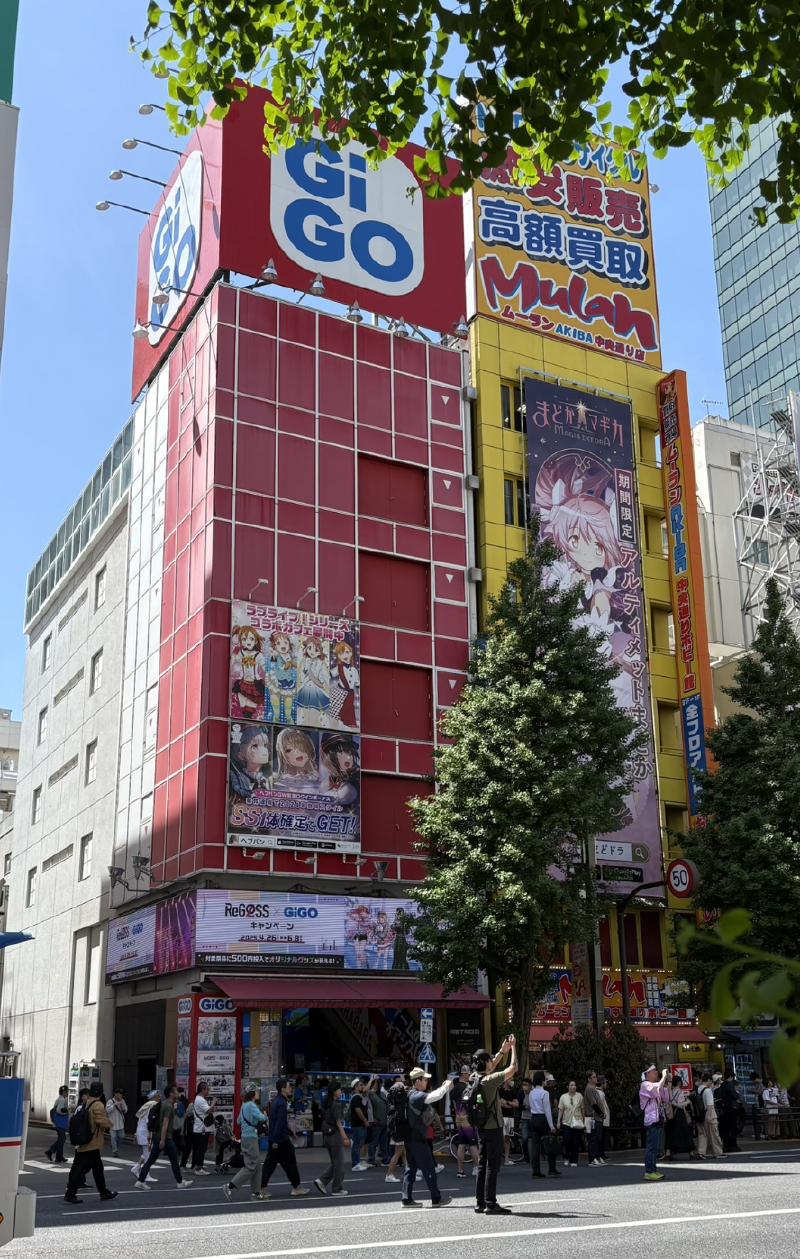
One of the first things you notice about Akihabara’s retail landscape is the buildings themselves. In North America, a shop occupies a footprint - one floor, one space, you see what’s there and you move on. In Akihabara, a shop occupies a column. Narrow frontage, multiple floors, anywhere between one and four distinct shops per level. You learn quickly to look up before deciding whether to bother going in, and to never assume you’ve seen everything just because you’ve walked the ground floor. We went into all sorts of places - figures, prints, cards, manga, things I couldn’t immediately identify - and didn’t make it into any of the iconic camera or electronics shops, which was fine because we weren’t there for cameras. We were there for anime, and we got considerably more than our fill.
What I wasn’t prepared for was how good Japanese retail staff are at their jobs. Every transaction, regardless of size, received the full treatment - merchandise carefully inspected, wrapped with actual care, receipt handed over with two hands, a bow at the end. A 200 yen purchase, less than two Canadian dollars, handled with the same unshowy professionalism as anything else. Spending money there felt like an event rather than a transaction, which is a distinction I hadn’t considered before and haven’t stopped thinking about since.
The receipt etiquette specifically was something I’d read about before we left - apparently jamming a receipt in your pocket is bad form, and you’re expected to receive it with two hands, look at it, and fold it neatly. For later admiration, presumably, though I’ll admit that part of the custom remained opaque to me. What I understood was that it clearly mattered to the people handing them over, so I went along with it and I’m glad I did. It would have been an easy thing to get wrong.
I think about these experiences regularly now, at home in Canada. The drive-through near me greets you with “yes?” at the speaker and slides your coffee through the window without making eye contact, debit machine already extended. No thank you, no have a good day. I actually stopped going.
The Science of Japanese Dr Pepper #
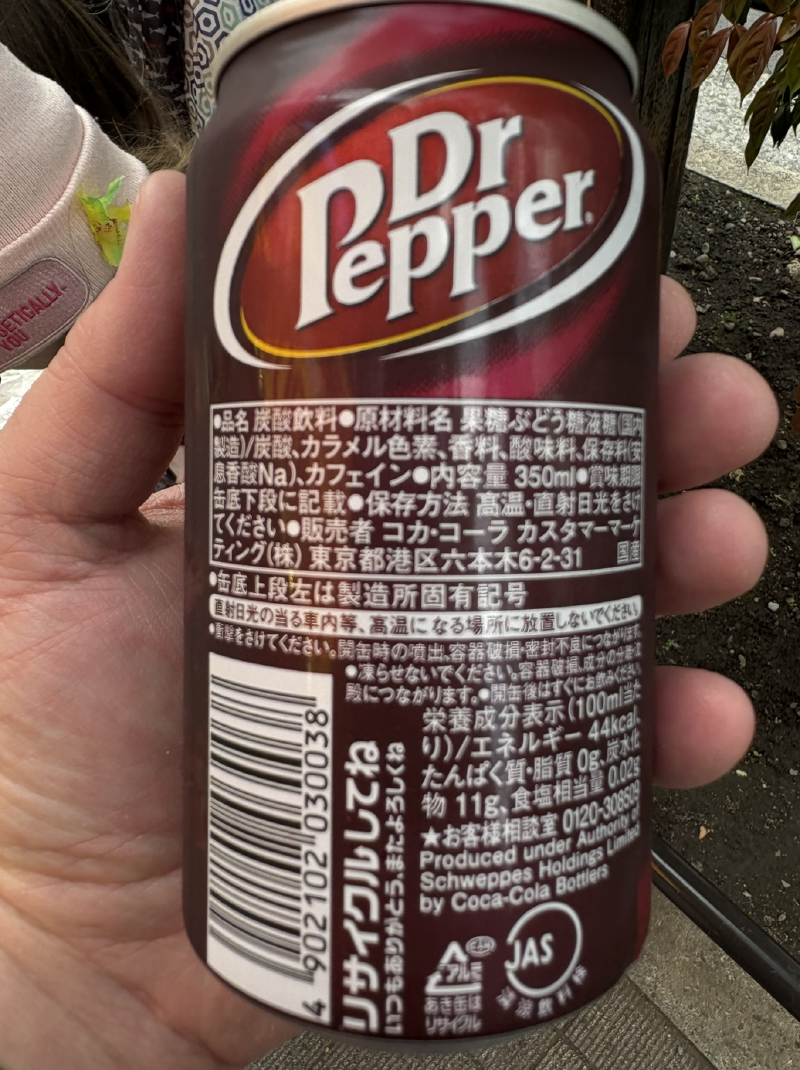
The first vending machine drink of the trip was Japanese Dr Pepper, which I want to be clear was not chosen for lack of options. Japanese vending machines offer an overwhelming variety of beverages, many of which I’d never encountered before and couldn’t identify, and I bypassed all of them in favour of a product I already knew because I needed to know if it was different. I’m a Dr Pepper fiend. There was a version of it in a can with Japanese text on it.
I was hoping for something unexpected - some regional variation that bore the name but contained something else entirely, a mystery in a familiar package. It tasted exactly like Dr Pepper. The can was extremely cool. Science conducted, hypothesis disproven, no regrets whatsoever.
The Gratte Café Situation #
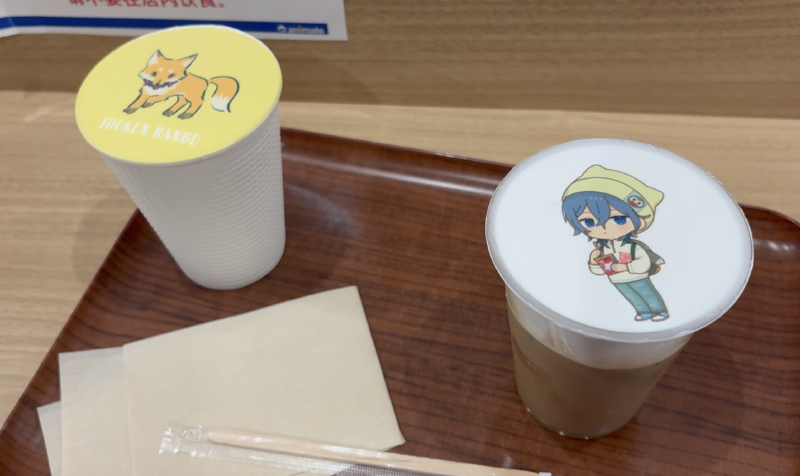
The Japlan had identified Animate Akihabara’s Gratte Café, a place that prints character art onto the surface of your latte. I had told the kids about this with what I can only describe as infectious enthusiasm - custom character lattes, in Akihabara, obviously we were going. What I had failed to account for is that the available characters are determined by whatever is currently popular in Japan, which doesn’t necessarily overlap with what’s currently popular in North America. My wife and I picked something cute and were perfectly happy. The kids could not get the characters they wanted and were not pleased about it. There was also the minor issue of nowhere to actually drink them - Japan has a thing about eating and drinking while walking, which I respect, but the café had limited seating and standing outside with a cooling latte felt socially wrong in a way I couldn’t quite articulate. We ended up hovering in a state of mild awkwardness until the drinks were gone.
In my infinite wisdom, I had already booked a second visit to the Gratte Café in Osaka, reasoning that a different city, a different location, might mean a different experience. I was optimistic about this. I’ll report back when we get there.
The Eorzea Café #
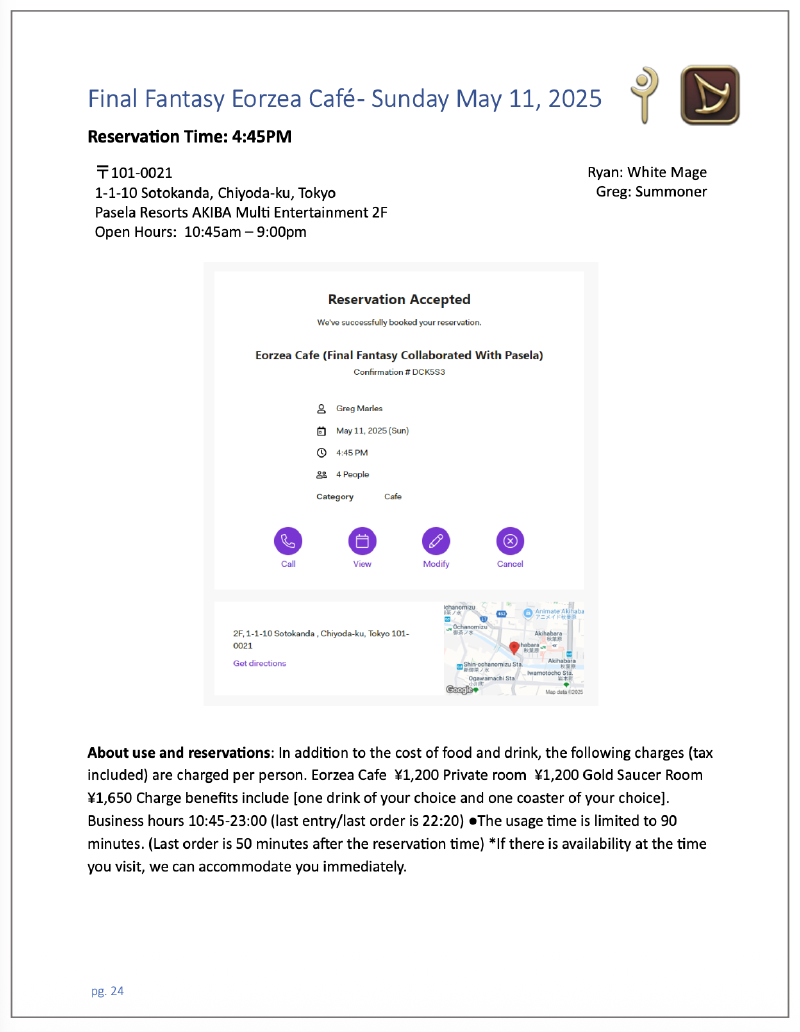
Also in the Japlan: the Final Fantasy Eorzea Café. Reservation confirmed, 4:45pm, four people. There is a note on that page, in my own handwriting, reminding me that I play Summoner in FFXIV and that my friend Ryan plays White Mage. I wrote this note because I had correctly anticipated that Japan would scramble my brain sufficiently that I might blank on the job I play in a game I’ve put hundreds of hours into, and I fully expected to be standing at the host stand going “uhhhhhhh” when someone asked.
The café occupies one floor of one of Akihabara’s multi-floor buildings, each level running a different themed café simultaneously. Monster Hunter had the floor above us and you could feel it - presence, energy, the sense of a place being actively invested in. The Eorzea Café, by contrast, felt like it was being wound down. Each location is supposedly styled after a specific starting area from the game, but what I got was a small room - seating for maybe twenty-five or thirty people - with themed posters on the walls, no permanent fixtures, and the general atmosphere of a diner that had dressed up for the occasion. Smaller than I’d expected, which is becoming a theme.
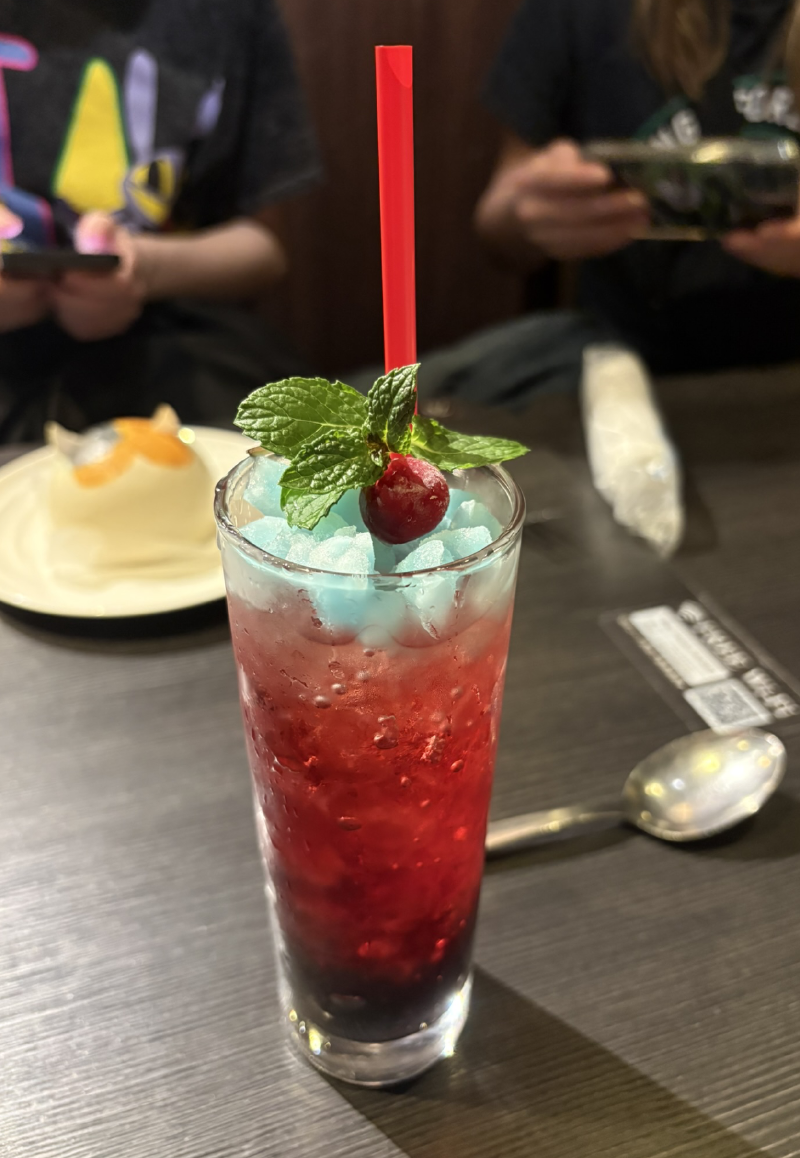
The food was decent and the prices were what I’d seen online, so no surprises there. What got us was the drinks - tiny, elaborately presented, priced to match the elaborateness, and roughly the volume of a generous espresso. Japan is not a large-beverage culture and the Eorzea Café was not going to be the outlier. They were beautiful. They were expensive. They made up most of the bill.
What I was actually there for was merchandise - Japanese exclusives, the things you can only get there. We came home with a Summoner pin for my backpack, a quantity of paper coasters I won’t use because I don’t want to ruin them, and about half a dozen fridge magnets that were handed to us at the end of the meal and briefly sent me into an irrational spiral about magnetic damage to electronics I wasn’t carrying. Nothing was harmed. I was being ridiculous.
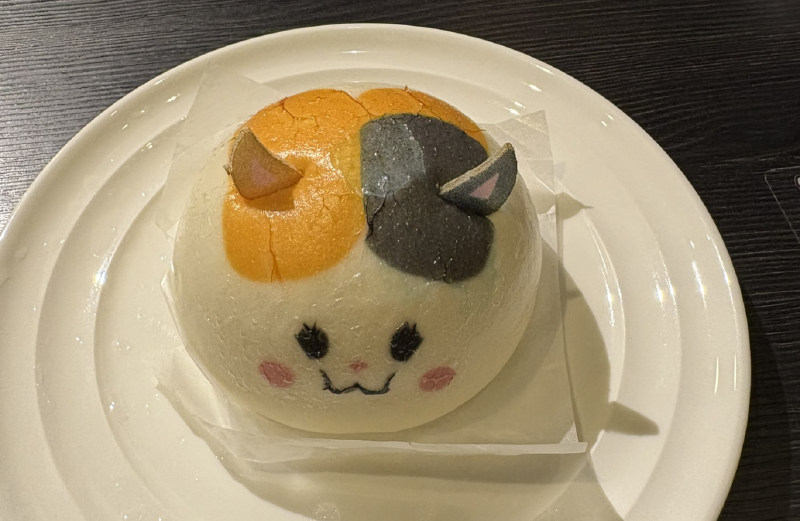
The kids had a great time, which is worth noting. They went in without expectations, without weeks of research and review-reading to build up a version of the experience the reality would have to compete with. Their food was shaped like a moogle. Their drinks were tiny and fancy and looked like they came from the game. That was enough for them, and in retrospect I think the Japlanning failed me here - I’d done enough research to set a bar the café couldn’t quite clear. If I’d walked in the way my kids did, just curious and present, it probably would have landed differently. That’s on me, not the café.
I don’t regret going to the Eorzea Café. If I hadn’t gone, I would always have wondered. I had also, as it happens, already booked the Osaka location for later in the trip - same logic, different city, different experience. I was optimistic about this too. I’ll report back when we get there.
The Frenzy #
My daughter had brought a finite amount of spending money to Japan and had what I understood to be a plan for it. The plan lasted approximately forty-five minutes in the first building we entered - one of those eight-floor establishments where each level has between one and four shops, anime and manga concentrated to a degree that apparently overrides the part of the brain responsible for financial decision-making. She moved through it with the focused intensity of someone who has been handed a stack of cash and told that the timer is running and if she doesn’t spend it all right now she loses everything. Pins, figures, keychains, bag tags, bath bombs - she didn’t realize that last one was a bath bomb at the time. She was buying faster than she was processing, and I watched it happen and did nothing to stop it because she was having the time of her life and I wasn’t about to be a buzzkill about it.
What I think was happening in her mind was a reasonable but incorrect assumption - that this building, this eight-floor concentrated shot of everything she loved, was probably the peak of what Akihabara had to offer. There was no way there could be more than this. How could there possibly be more than this. There was significantly more than this. Akihabara is essentially made entirely of buildings like this one, and we had not even started.
By the time we got back to the hotel, she’d spent approximately 95% of what she’d brought for the entire trip. On Day Two. The math hit her all at once - full tears, the regret spiral, the dawning horror of two more weeks in Japan with essentially no budget. We revealed the existence of backup spending money, which we’d brought precisely because we’d anticipated this moment, though we’d expected it to arrive somewhat later than Day Two. We didn’t tell her how much. Strategic information withholding. She paced herself better after that. Mostly.
My wife, for her part, seemed relieved that the things I was hunting were rare, expensive, and consistently out of reach. She knows exactly which parent my daughter’s shopping instincts came from, and it isn’t her. If Bloodborne figures had been affordable and plentiful, we may have had some difficult conversations later in the trip. We ended up having some difficult conversations later in the trip anyway, thanks to a visit to Tamiya HQ and the ongoing figure situation, but that’s another post.
The Capsule Machine Situation #
The kids had been hoping to find the legendary gashapon arcades - floor to ceiling capsule machines, entire buildings dedicated to the pursuit of mystery figures in small plastic bubbles. We found some. They weren’t quite the epic experience the videos online had suggested, which probably means we didn’t find the right ones or weren’t looking hard enough. My wife and I were fine with this outcome. We are not blind box people. We knew with certainty that walking our kids into a proper capsule machine arcade would result in every remaining yen disappearing in twenty minutes and a bag full of random figures from franchises nobody could identify. We did make sure they got to try capsule machines a few times - we weren’t about to walk past one and tell them “not really our scene,” because that’s not how this works - but we didn’t go looking for the motherlode, and I think that was probably the right call.
Everything I Like is Apparently Niche #
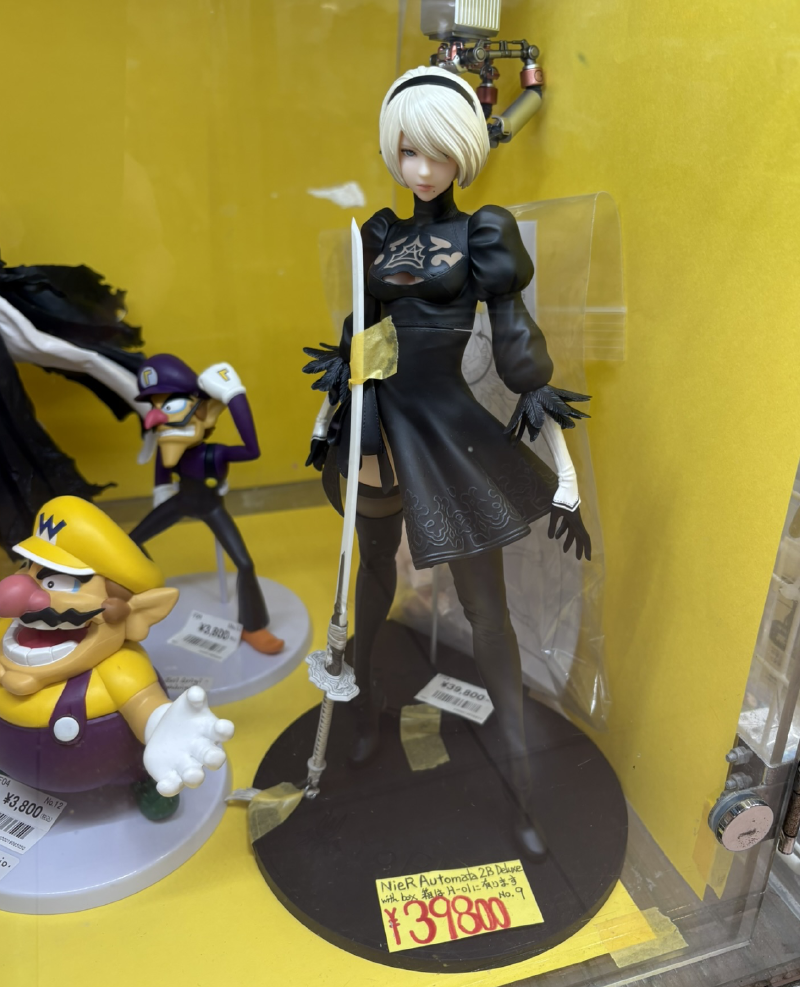
I’d also started developing my own figure agenda by this point, which my wife had predicted and budgeted for emotionally if not financially. Bloodborne figures - found them, rare, eye-wateringly expensive. Nier Automata - slightly less rare, still eye-wateringly expensive. Final Fantasy figures in any format - essentially nonexistent at any price point, which felt like a personal slight given I’d just eaten at the Eorzea Café. I complained to my wife that apparently everything I like is niche. She did not seem surprised by this information.
Macross, on the other hand, was everywhere - beautiful, detailed, and completely unaffordable. This stung a little, because not long before we’d left for Japan I’d spent a day at Anime North specifically hoping to find something in that universe and came home empty handed. Turns out the secret was to go to Japan, where Macross apparently has an entire economy. There was a veritech fighter I still think about occasionally - I didn’t know at the time that it was a Japan exclusive, which in retrospect explains both the quality and the price, and if I’d known that Macross would be everywhere in Japan and essentially nowhere in North America, I would have tried considerably harder to justify the cost. I’ve been trying to track it down online since we got home with limited success. I am apparently building a collection of things I can’t find and can’t afford, which is either a hobby or a condition, and I’m not sure the distinction matters.
The Secondary Quest #
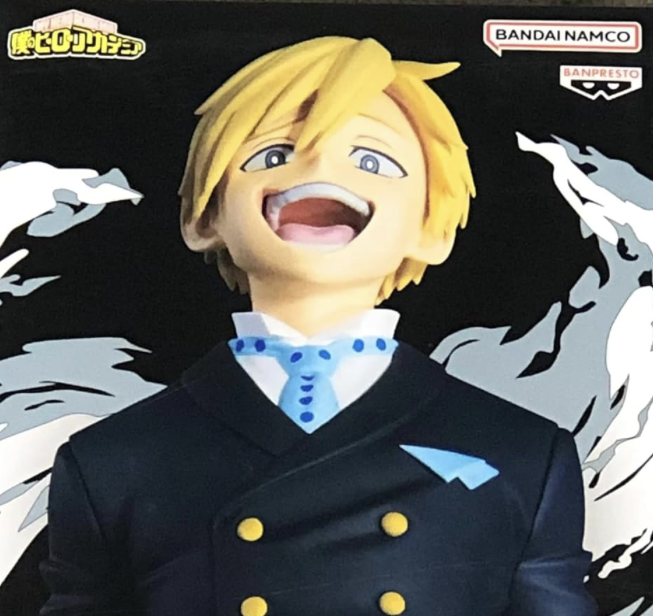
On Day One, my daughter had spotted a specific figure cube in a specific shop, pointed at it, and told me she wanted to check it out later. It seemed like a simple enough thing at the time - remember the shop, come back, done. What followed was two weeks of increasingly determined searching across three cities, because we never found that shop again. Not for lack of trying. It became the secondary quest running parallel to the Monoma primary quest, and between the two of them we covered approximately thirty-five figure stores across Tokyo, Nakano, and Kyoto. Conservatively. My daughter, to her credit, eventually made peace with it and moved on to other pursuits. My wife and I did not. At some point the hunt had stopped being about the figure and started being about the principle of the thing, and neither of us was willing to admit that out loud.
We found the cube on our last day in Tokyo, tucked into a shop we’d somehow missed across four previous visits to Akihabara. The proverbial needle in the haystack, located at last. My daughter checked the price on the figure she’d been hoping to find inside, doing the mental conversion from yen to Canadian dollars with the focused calm of someone about to receive good news.
It was ¥40,000. Not ¥4,000. She’d been off by a factor of ten.
She was not pleased, which was a completely reasonable response to two weeks of searching culminating in that particular number. I thought it was kind of funny, which was possibly not the wisest reaction to have in front of a disappointed teenager, and I stand by it anyway.
The Monoma hunt, meanwhile, continues. For now.
You Can’t See It All in One Day #
People who know Akihabara will tell you that you could spend a week there and still not scratch the surface. I believed them before I went. I believe them more now. We didn’t see the electronics shops, barely touched the figure stores, walked past entire buildings without going in. Akihabara was non-negotiable from the start - the single most important item on my daughter’s wishlist - and by hitting it early and often we were building goodwill for the temples and shrines and museums that were coming later in the trip. The stuff a teenager might, if pressed, describe as boring.
This theory is sound in principle. What I’d forgotten is that travelling with teenagers doesn’t work like a loyalty program. The credit doesn’t accumulate - it resets every night. You wake up the next morning back at zero, negotiating fresh. It’s been a while since I was a moody teenager and I am relearning this particular lesson in real time.
Still - Akihabara delivered. For all of us, in different ways, at different price points, with varying degrees of financial regret. I’d go back tomorrow, and I’d stay in Ryogoku again - quieter, perfectly positioned, two stops on the right train. Close enough to get there easily, far enough to feel like you’ve actually left at the end of the day, which matters more than you’d think.